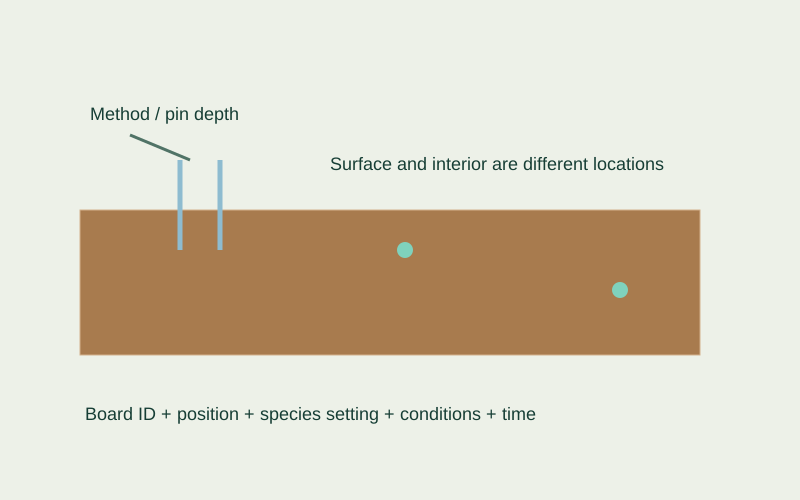
- Record the measurement method and the region it can assess.
- A surface observation does not establish the moisture condition throughout the section.
- Instrument correction and depth must follow the named meter and species documentation; dots are conceptual locations.
Define the question before choosing boards
A receiving check, a follow-up on one wetted corner, and a comparison between storage areas are different questions. Write down which question the session addresses. Then identify the bundles, boards, or positions you intend to observe. This suggested planning method helps organize evidence; it does not prescribe a statistically representative sample size or replace a product-specific inspection procedure.
Map what you can reach
A simple sketch can identify accessible outer rows, ends, and separated bundles. Give selected boards durable record names and describe their positions. Avoid quietly treating conveniently reached boards as the entire delivery. If opening or moving material is needed to reach other positions, follow the product's handling instructions and the site's safe handling arrangements. Record inaccessible areas as a limitation rather than implying that they were checked.
- Use bundle and board identifiers together.
- Distinguish planned positions from positions actually measured.
- Record why a planned observation was omitted.
- Keep a copy of the layout with each measurement session.
Keep the method consistent enough to compare
Record meter model, mode, species setting, face, position, and relevant corrections. Electronic measurements depend on the instrument and measurement conditions. A second session is easier to interpret when it returns to the same identified locations with the same documented method. Where conditions or equipment change, preserve that change in the record instead of presenting every number as directly interchangeable.
Report the sample without overstating it
Show individual observations alongside any summary. A mean describes the values entered; it does not prove the condition of every board. Report the count of distinct boards separately from the count of readings because several readings on one board are not several boards. If an unusual location needs investigation, retain it and explain the follow-up rather than removing it to make the summary look more consistent.
Hypothetical sampling map with a visible gap
A crew records four identified boards on the accessible side of bundle C. The opposite side and interior remain blocked by other material. Their worksheet shows four boards observed and explicitly marks the unobserved areas. At the next handling stage they add newly accessible positions as new observations, while retaining the original four for a matched comparison.
Common questions
How many boards must I measure?
Use the applicable product or project procedure where one exists. This guide does not supply a universal sample count or claim statistical coverage for a convenient sample.
Can several readings from one board establish bundle condition?
They describe that board at the recorded positions. Keep the board count visible so repeated measurements are not mistaken for broader coverage.
Evidence & limits
Reviewed September 13, 2026. Sources support their stated technical principles; this site's workflows and hypothetical examples are not product tests, supplier approvals or independently reviewed project records.