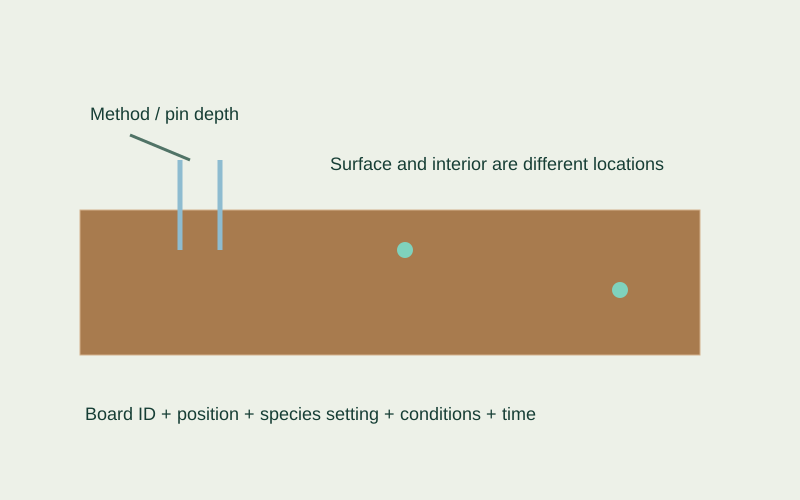
- Record the measurement method and the region it can assess.
- A surface observation does not establish the moisture condition throughout the section.
- Instrument correction and depth must follow the named meter and species documentation; dots are conceptual locations.
Broad material groups are not correction tables
A description such as softwood or dense hardwood is useful context, but it is not enough to choose a numerical meter adjustment. Identify the supplied product and species as precisely as the documentation supports. Do not infer the correct setting from how heavy a board feels or how difficult it is to mark. The measurement record should preserve the name actually used for the manufacturer's lookup.
Keep the correction tied to the instrument
USDA identifies species and other material conditions as influences on electrical moisture measurements. Manufacturer documentation provides the applicable settings and adjustments for particular meters. A density or species value used by one instrument is not automatically the correction for another method. Retrieve the exact model's instructions, and check that the species information belongs to that model rather than a similar product in the same catalog.
Know when the lookup has not answered the question
A missing species, ambiguous commercial name, or unsupported setting range calls for clarification. Do not extrapolate beyond a published range or choose the closest-looking name simply to obtain a displayed result. Ask the manufacturer what procedure applies and save its response. If an observation was made before that clarification, keep it labeled with the setting actually used rather than silently converting it into a verified value.
Keep mixed materials separate during a session
When switching between products, identify the change in the log and confirm the setup before the next observation. A simple material-and-setting card can help prevent an earlier selection from carrying into another bundle. Record whether the device adjusts internally or a later correction is required. This suggested workflow prevents avoidable record confusion; it does not claim to validate a meter for an unsupported material.
- Pair each bundle with its documented lookup name.
- Record settings at each material change.
- Preserve raw values and any later correction separately.
Hypothetical session across two species groups
An operator finishes observing a softwood bundle and turns to a dense hardwood product. Before scanning, the operator checks the second product's documented name against the exact meter's guidance. Its commercial label is ambiguous, so clarification is requested. The previous setting is not reused as a placeholder that later appears in the report as a corrected hardwood measurement.
Common questions
Can I use a generic hardwood setting?
Only where the applicable instrument instructions support it for the material. A broad category alone does not establish a valid adjustment.
Can I calculate the missing correction from another species?
Do not invent an interpolation unless the manufacturer provides that procedure. Obtain guidance for the actual model and material.
Evidence & limits
Reviewed September 13, 2026. Sources support their stated technical principles; this site's workflows and hypothetical examples are not product tests, supplier approvals or independently reviewed project records.